
If you’re reading this, your chatbot responses probably aren’t what you expected. It answers quickly, but not always correctly. And fixing it feels harder than buying it did.
The problem isn’t the AI model, It’s how the system is designed, trained, and corrected over time. This guide breaks down what we’ve learned from building public-facing chatbots with large, mixed-format knowledge bases, and how to improve accuracy without starting from scratch.
What Accuracy Really Means
Accuracy does not always depend on being factually correct. A chatbot response is accurate only when three things align:
- Correctness: The information is true, current, and regularly updated based on real user feedback.
- Relevance: It answers what the user meant, not just what they typed.
- Completeness: It doesn’t leave the user guessing about next steps
Miss even one, and the response feels unreliable. But the good news is that you don’t need a new chatbot to fix this. You need better structure, guardrails, and feedback loops.
Here are 7 practical ways to make that happen…
1. Track the Right Metrics from Day One
Your chatbot is only as good as the data it learns from. Even the most advanced AI can’t work miracles with outdated, vague, or poorly formatted content.
Increase your accuracy by knowing what to measure:
- How many chats happen outside business hours
- How often does the bot fail to reply confidently
- How often users exit mid-conversation
- Which topics trigger negative feedback
Before tuning the chatbot, audit the data.
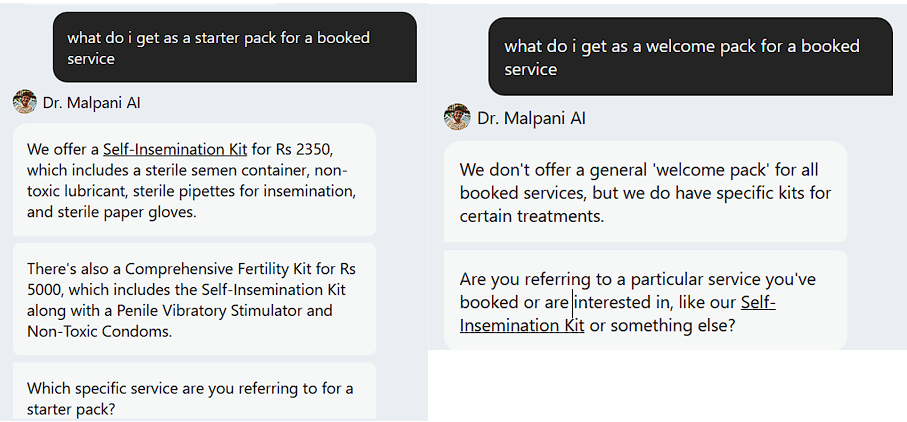
2. Move Beyond Keyword Matching
Keyword-based bots are brittle.
A user says:
“I didn’t get my welcome kit.”
Your Knowledge Base says:
“Starter pack dispatch timeline.”
The bot sees no match and gives a vague response.
Smarter chatbots use semantic search. They understand that “welcome kit,” “starter pack,” “onboarding package,” and “trial package” might all mean the same thing. They search for concepts, not just keywords.
Here’s how we did it:
3. Teach Your Chatbot to Clarify Before Answering
When a question is vague, smart chatbots ask for clarification before answering.
A user types, “What is the price?” A poorly designed chatbot dumps prices for every product in one overwhelming response.
A well-trained chatbot asks: “I’d be happy to help with pricing. Which product would you like to know about?”
This extra message ensures the chatbot provides exactly what the user needs, not just everything it knows about pricing.
4. Fix the Gaps Instead of Ignoring Them
Now that you know where your bot struggled:
- Expand the knowledge base with correct answers
- Add clearer intent mappings
- Re-train the bot on how to respond when it fails to understand certain questions
When the bot makes a mistake and it’s fixed immediately, the bot becomes smarter.
5. Define an Honest Path for Unknown Answers
No chatbot knows everything. The question is: how does yours handle what it doesn’t know?
Many chatbots never admit ignorance. They provide generic, unhelpful responses. Worse, they hallucinate answers (making up something that sounds plausible but is completely wrong).
Both scenarios damage trust. Generic answers waste time. Wrong answers can cause serious problems.
A better approach is honesty. “I don’t have information about that in my knowledge base. Let me connect you with someone who can help.“
6. Target the High-Impact Topics First
Not all questions are equal. Some dominate your traffic and directly affect satisfaction.
Automating those well-asked topics has an outsized impact:
- Reduce repeat human support tickets
- Increase first-contact resolution
- Raise overall user trust
Fixing just a couple of high-volume intents can move your accuracy metric significantly.
7. Use Feedback as a Continuous Loop
Accuracy is a cycle, and getting it right just once won’t help you win.
Continuous Improvement Loop
- Log user feedback
Collect issues, complaints, usage data, and edge cases from real users. - Review patterns
Look for repeated problems, common trends, and root causes instead of isolated incidents. - Make systematic updates
Fix the system itself, not one-off symptoms or individual failures. - Measure again
Track outcomes like errors, user satisfaction, performance, and resolution rates. - Ask: Did things improve?
If yes: Scale the solution and standardize it.
If no: Loop back to reviewing patterns and refine further.
How BeyondChats Brings It All Together
At BeyondChats, we’ve built our platform around these seven principles because we’ve seen how transformative they are.
- We prioritize factual correctness above speed. An answer only matters if it’s right, and every response is in your knowledge base, not AI guesswork.
- Hallucinations, confident-sounding but fabricated responses, are eliminated.
Example of Hallucination:
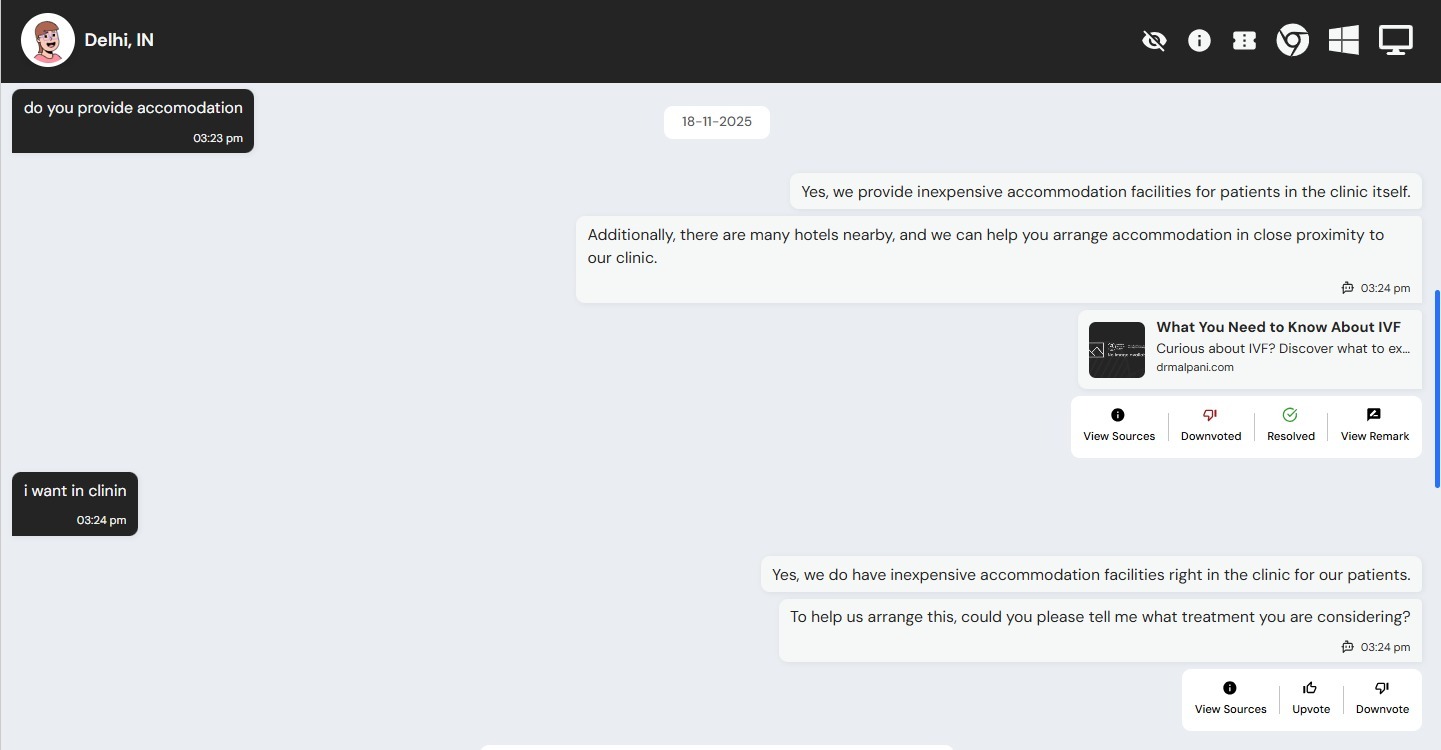
Here’s how we solved it:
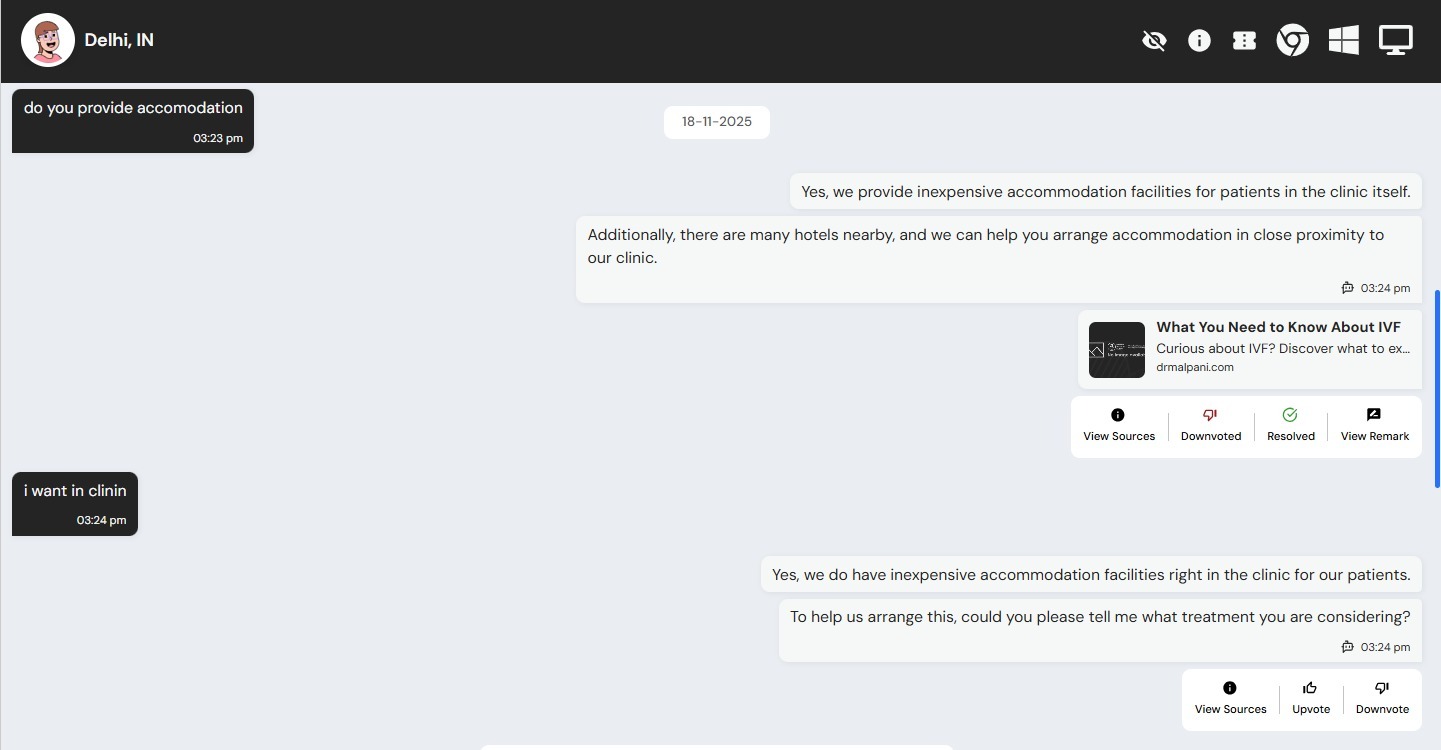
- You get complete visibility into conversations. Review transcripts, spot patterns, and see exactly where the bot performs well or needs improvement.
- Built-in upvotes and downvotes capture real user feedback on response quality.
- We don’t deploy generic bots. Each chatbot is configured over one to two weeks, trained on your content, aligned with your brand voice, and fine-tuned for accuracy.
The result is a chatbot that feels human, sounds knowledgeable, and converts visitors into customers.
Conclusion
Increasing your chatbot’s accuracy by 20% or more isn’t about luck or expensive software. It’s about applying these seven strategies consistently.
Clean, well-formatted data. Semantic understanding over keyword matching. Clarification of ambiguous questions. Clear response guidelines. Honesty about limitations. Continuous improvement. Accessible chat data.
When these pieces work together, your chatbot transforms from an occasionally helpful tool into a genuinely valuable asset that handles queries accurately, builds trust, and drives business results.
The technology exists right now. The question is whether you’re ready to implement it.
Ready to build a smarter chatbot?
Book a BeyondChats exploration call with our CEO and build your free chatbot today!
FAQs
1. What does chatbot accuracy actually mean?
Chatbot accuracy means delivering factually correct, relevant, and complete answers that truly address what the user asked.
2. Why do most chatbots give wrong or confusing answers?
The main reasons are poor data quality, keyword-based search, unclear response rules, and no clear handling of unknown questions.
3. Can chatbot accuracy really improve by 20%?
Yes. Improving data structure, using semantic search, adding clarification logic, and continuously reviewing mistakes can easily compound into a 20% or higher accuracy lift.
4. How do chatbots handle questions they don’t know the answer to?
Well-designed chatbots admit gaps honestly and escalate to human support instead of guessing or hallucinating responses.
5. How does BeyondChats ensure higher chatbot accuracy?
BeyondChats focuses on factual grounding, semantic understanding, transparent escalation, accessible chat analytics, and custom training tailored to each client’s knowledge base.


